HANOI HAS YET TO APPROVE THE LOW-EMISSION ZONE PROPOSAL WITHIN RING ROAD 1
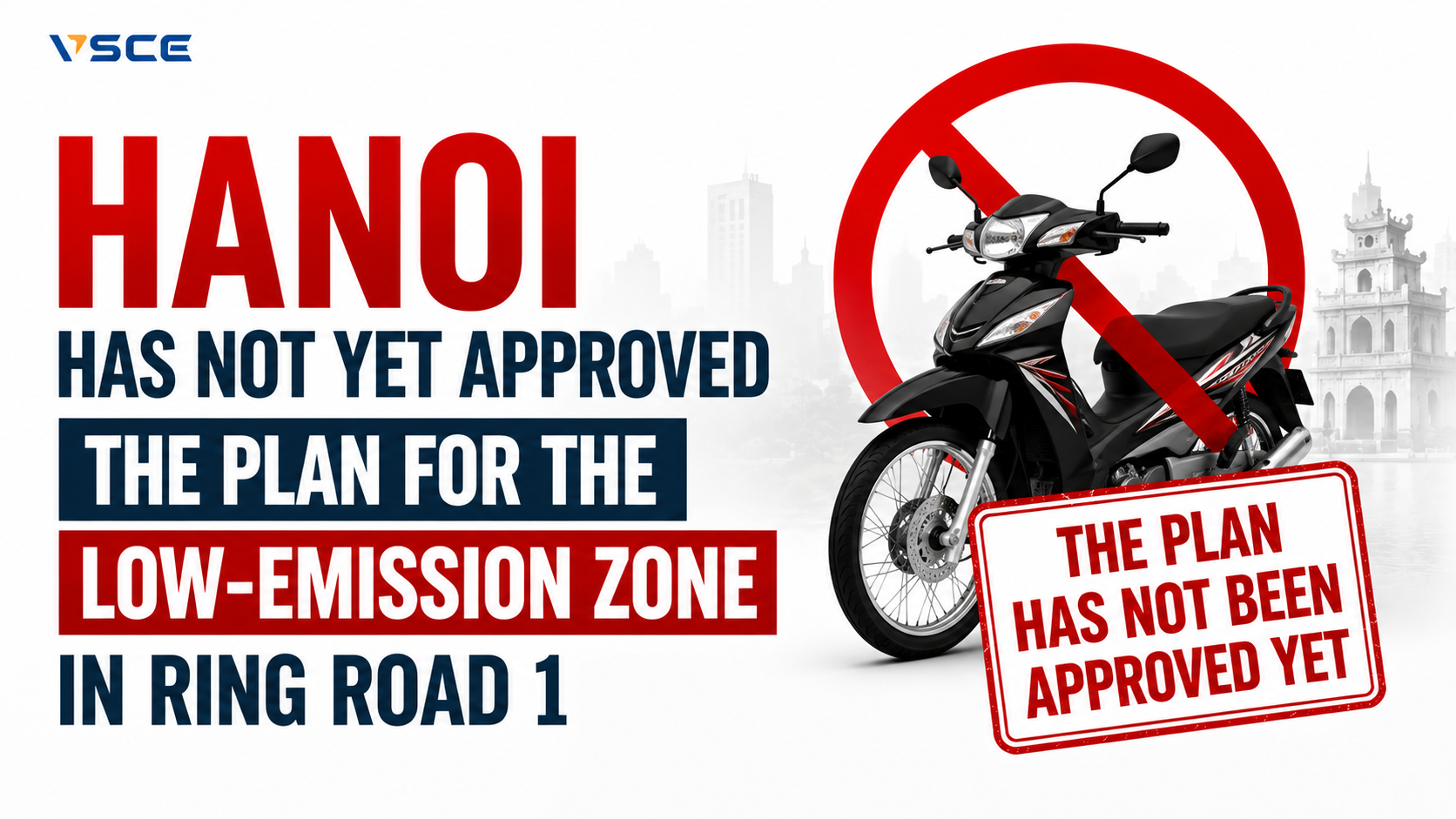
Although it was expected to become a breakthrough initiative in “greening” the capital, the Low-Emission Zone proposal in Hanoi has yet to be implemented. The obstacles lie not only in administrative procedures, but also in the widespread reliance on gasoline-powered motorbikes and resistance to change, while charging infrastructure and support policies for green transportation remain insufficient and unclear.
PROGRESS HAS FALLEN SHORT OF EXPECTATIONS
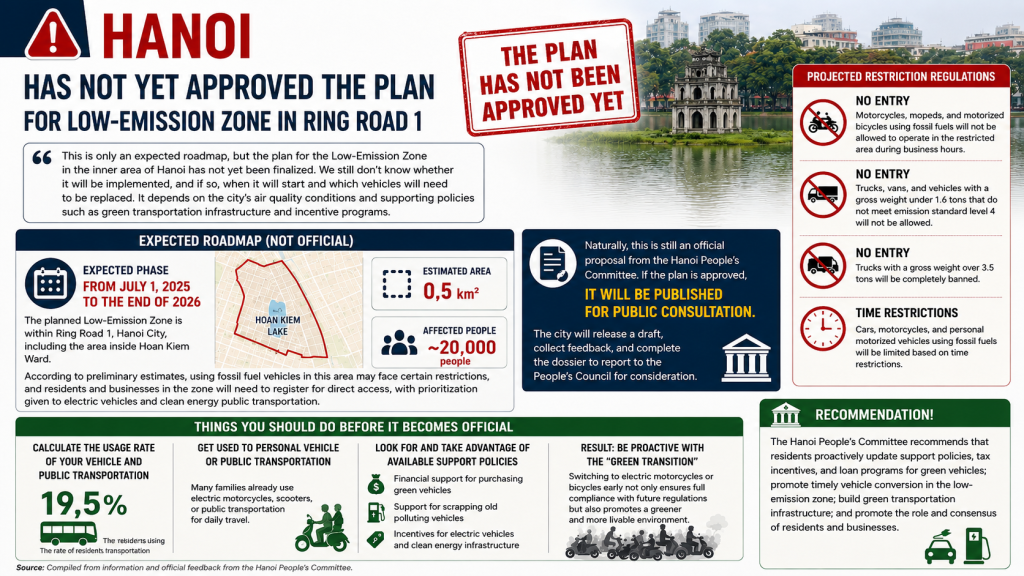
According to the initial proposal, from July 1 through the end of 2026, Hanoi planned to pilot the “Low-Emission Zone within Ring Road 1” project in the core and buffer areas of Hoan Kiem Ward. The pilot area was expected to cover approximately 0.5 km² with a population of around 20,000 residents. Under the proposal, vehicles using fossil fuels would be restricted within the area, while residents living in the pilot zone would be required to register online with local authorities regarding their roadmap for transitioning from gasoline- and diesel-powered vehicles to more environmentally friendly means of transport.
- Not permitted to operate: Commercial motorcycles and motorbikes using fossil fuels.
- Not permitted to operate: Trucks and passenger vehicles with 16 seats or more that fail to meet Level 4 emission standards.
- Banned from operating: Trucks with a gross vehicle weight exceeding 3.5 tons.
- Restricted during certain hours: Privately owned motorcycles and motorbikes using fossil fuels.
However, at the most recent special session of the Hanoi People’s Council, the proposal had yet to be approved. The reason given was that “the draft submission and resolution did not yet meet the necessary requirements regarding conditions, information, and documentation for the City People’s Council’s review.”
UNRESOLVED BOTTLENECKS
Originally regarded as a decisive move toward transforming and improving the capital’s environment, the establishment of a green belt within central Hanoi is now facing numerous challenges and continues to be delayed.
The proportion of residents using public transportation currently stands at only 19.5%. The widespread habit of using gasoline-powered private vehicles remains dominant, with most households owning one or two motorbikes due to their flexibility and convenience. One of the reasons gasoline motorbikes continue to prevail – and why many people remain reluctant to switch to more environmentally friendly vehicles – is the lack of financial support policies, charging infrastructure, electricity pricing mechanisms, and preferential charging rates dedicated to green transportation.
As a result, the Urban Affairs Committee has recommended that the Hanoi People’s Committee promptly introduce financial support policies, tax and registration fee incentives, and license plate benefits for green vehicles. At the same time, it has urged authorities to accelerate the completion of the Low-Emission Zone proposal and establish a clear, transparent vehicle transition roadmap in order to gain public and business consensus.
Information on the “Low-Emission Zone within Ring Road 1, Hanoi” proposal: https://drive.google.com/drive/folders/1WLkDF6_l6IezldzshjnJWpUid5dLDndz?usp=drive_link

Tác giả: Admin
Một thành viên của VSCE.